

What to Do Before You Go on Maternity Leave (And What Most Women Leave Too Late)
Going on maternity leave soon? Find out what actually protects you — not just your employer — before you walk out the door.
Donna Davies
6/7/2026
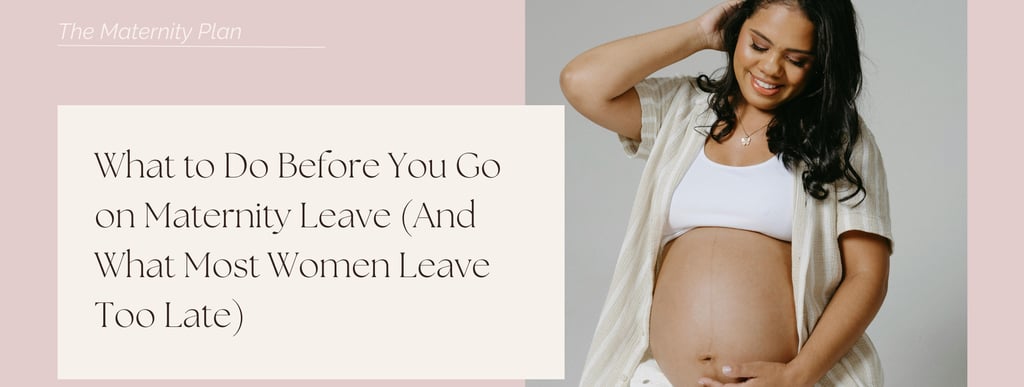

You're a few weeks out. The to-do list is growing. And somewhere between the hospital bag and the handover doc, a quiet anxiety has taken root.
- What if I've missed something?
- What if things change while I'm gone?
- What if I come back and it's all... different?
If that sounds familiar, you're not being dramatic. You're being perceptive. Because there's a version of preparing for maternity leave that protects your employer, and there's a version that protects you. Most women end up doing the first one without realising it.
This post is about the second one.
Why the Standard Advice Isn't Enough
Type "what to do before maternity leave" into Google and you'll get lists. Write a handover document. Brief your cover. Set your out-of-office. Update your contacts spreadsheet.
All useful. None of it the most important stuff.
The handover document protects your employer. It makes sure the work continues when you're gone. That is genuinely fine and worth doing. But it does almost nothing to protect your position, your role, your salary, or your ability to come back to something that still resembles the job you left.
The conversations that actually matter, the things to get in writing, the formal steps that create a paper trail if you need one later - those are what most women leave too late. Not because they don't care, but because nobody told them those were the things to prioritise.
Start Earlier Than You Think You Need To
If you're 6 to 8 weeks out right now, you're in the window where things still feel manageable. Use it.
The reason to start now isn't anxiety. It's leverage. Right now, you're still in the building.
You have regular access to your manager.
Decisions about your cover, your handover, your return date - these are still being made, not locked in.
Once you leave, your ability to shape those decisions shrinks significantly.
The women who come back to clearly defined roles, agreed flexible working arrangements, and a smooth return to work are almost always the ones who sorted those things before they left. Not after.
The Conversations to Have Before You Leave
1. The "what are we agreeing right now" conversation with your manager
This is the one most women skip because it feels awkward. It shouldn't be awkward - it's professional and reasonable. But it requires you to initiate it.
You want to leave this conversation with clarity on:
- Who is covering your role and what exactly they're covering
- What happens to your projects while you're out
- Whether your role will still exist when you return (if there's any restructure risk, now is the time to ask directly)
- What the process is for getting in touch if your employer needs to reach you, and what you're comfortable with
That last one matters more than people realise. You are not required to be contactable during maternity leave. But if you don't set clear expectations before you go, the default assumption is often that you're available on email.
2. The flexible working conversation (yes, before you leave)
You don't have to decide right now what your return will look like. But if you have any sense that you'll want to come back on different terms -- fewer days, different hours, hybrid working - it's worth mentioning it before you go.
This isn't a formal flexible working request. It's a heads-up that starts the conversation early, which tends to produce a much better outcome than a request that lands out of nowhere three weeks before your return.
If you're in a senior role, or your team has restructured while you've been away, or you have any reason to think a flexible working request might be complicated - that's a conversation worth preparing carefully. More on that below.
3. The "who do I contact if something comes up" conversation with HR
Not every workplace has a clear answer to this. Know who your HR contact is, have their details saved somewhere you can access from outside work, and confirm that you'll be informed of any significant changes to your role, team, or department during your leave.
That last part is important. You have a legal right to be told about vacancies that arise while you're away if you would have been a suitable candidate. Not every employer volunteers this information. Asking for it before you leave, and ideally getting it confirmed in writing, puts you in a better position.
What to Get in Writing Before You Leave
The handover document is a document. But it's not the only one that matters.
Your leave start and end dates, confirmed in writing.
This sounds obvious. It often isn't done properly. You want an email or letter from your employer confirming your last working day, your due date for reference, and your expected return date (even if it's just the statutory 52 weeks). If those dates change later, there's a clear record of what was originally agreed.
Any agreements about your role during leave.
If your manager has promised that your secondment role will be maintained, or that you won't be expected to attend a quarterly review, or that your pay review will still happen in April - get it in an email. You don't need a formal contract addendum. An email you send to summarise "what we discussed" and that doesn't get contradicted is evidence.
Your contact preferences.
If you've agreed that you'll be contactable by phone for genuine emergencies only, and that routine queries should go through your cover - put that in writing before you go. A quick email to your manager saying "just to confirm our conversation, during my leave I'd prefer..." is all it takes.
The Things Most Women Leave Too Late
Not confirming maternity pay in writing
You should have received a written statement of your contractual maternity pay before your leave starts. If you haven't, ask for it. This should set out what you'll receive and when, including when enhanced pay (if you're entitled to it) will be paid. Don't assume the verbal conversation in the HR meeting was enough.
Not checking in on their pension contributions
If your employer contributes to your pension as part of your contract, those contributions should continue during paid maternity leave. This catches a surprising number of women out. Worth a quick check with HR or payroll before you leave.
Not taking note of KIT days
Keeping in touch days are 10 optional days during your maternity leave that you can work without losing your statutory pay for that week. They're genuinely useful. They're also optional - which means your employer cannot require you to take them.
If your manager has mentioned KIT days in a way that felt more like an expectation than an offer, that's a conversation worth having clarity on before you leave.
Not starting the flexible working conversation early enough
If you know you'll want to come back on different terms and your workplace or role is likely to push back, the time to start that process is before you leave - not three weeks before your return date when you're exhausted and negotiating from a position of less leverage.
The Handover Document: What to Include (and What to Leave Out)
You do need a good handover. But there are two things most handover templates get wrong.
First, they're too detailed.
A 40-page handover document is a document no one will read. Your cover will Google the things they don't know. What they actually need is: key contacts, live projects with status and next steps, any deadlines in the next six months, and where to find things.
Second, they double as an argument for why your role can be made redundant.
If your handover document makes it look like a junior person can do your job for 12 months without much guidance, you've inadvertently helped your employer justify a restructure. Be thorough about the what. Be sparing about how much detail you give on the how.
If Your Situation is More Complex
Most of the above applies to a relatively straightforward situation - you're leaving, your role is stable, you'll be coming back to the same job.
But not everyone is in that situation.
If you're in a senior role and you're nervous about what you're coming back to. If there's been talk of restructuring and you're wondering whether your position will be affected while you're away. If your cover is significantly more junior than you are, or significantly more senior. If you're navigating a redundancy risk that no one is saying out loud yet. If you have a supportive HR team in theory but a manager who's already made this feel complicated.
These situations need more than a checklist. They need a plan built around your specific circumstances - your contract, your employer, your role, and what you actually want to come back to.
That's exactly what the Complete Maternity Leave Planner is designed for. It's not a document. It's a structured process that takes you through everything that matters -- in the right order, with the right questions, accounting for the specifics of your situation. It's the thing that turns "I think I've got this covered" into "I know I have."
And if you're already in territory where you're worried about something specific - a conversation that went oddly, a comment about restructuring, a manager who's made things feel uncertain - a one-hour consulting call is probably worth your time. I spent over a decade sitting on the employer side of these conversations. I know what employers are thinking, what HR teams are looking for, and where women tend to get caught out. A call is [link] £97. The cost of navigating a redundancy situation, or a return-to-work disagreement, without that advice is significantly higher.
Start With the Free Guide
If you're in the early stages and you want to start somewhere that isn't overwhelming - the free checklists are the right first step. They walk you through the key milestones before, during, and after your leave, and helps you understand which bits need more attention based on your situation.
It takes about 20 minutes to work through. Most women tell me they feel noticeably calmer after it - not because everything is sorted, but because they know what they're dealing with.
Download the free guide here
The One Thing to Take Away From This
You can hand over your job perfectly and still come back to find your role has quietly shifted, your flexible working request has been refused, and the seniority you built over years has been eroded by 12 months of absence.
That doesn't happen because employers are malicious. It happens because nobody pushed back before it started.
You get to push back. You just need to know what to push back on, and when.
Donna is a consultant with 10+ years in corporate HR, L&D, operations, and management consulting. She is a qualified Train the Trainer in Neurodiversity. She has sat on the employer side of maternity leave conversations and she built The Maternity Plan because she saw, repeatedly, how much better the outcomes were for women who knew what she knew.
Supporting working mums through every stage of maternity leave clear, practical guidance that actually works in real life.
© 2026 The Maternity Plan. Designed with working mums in mind.